
No Is A Full Sentence
No Is A Full Sentence
No one deserves the essay. Unless you actually want to give it.
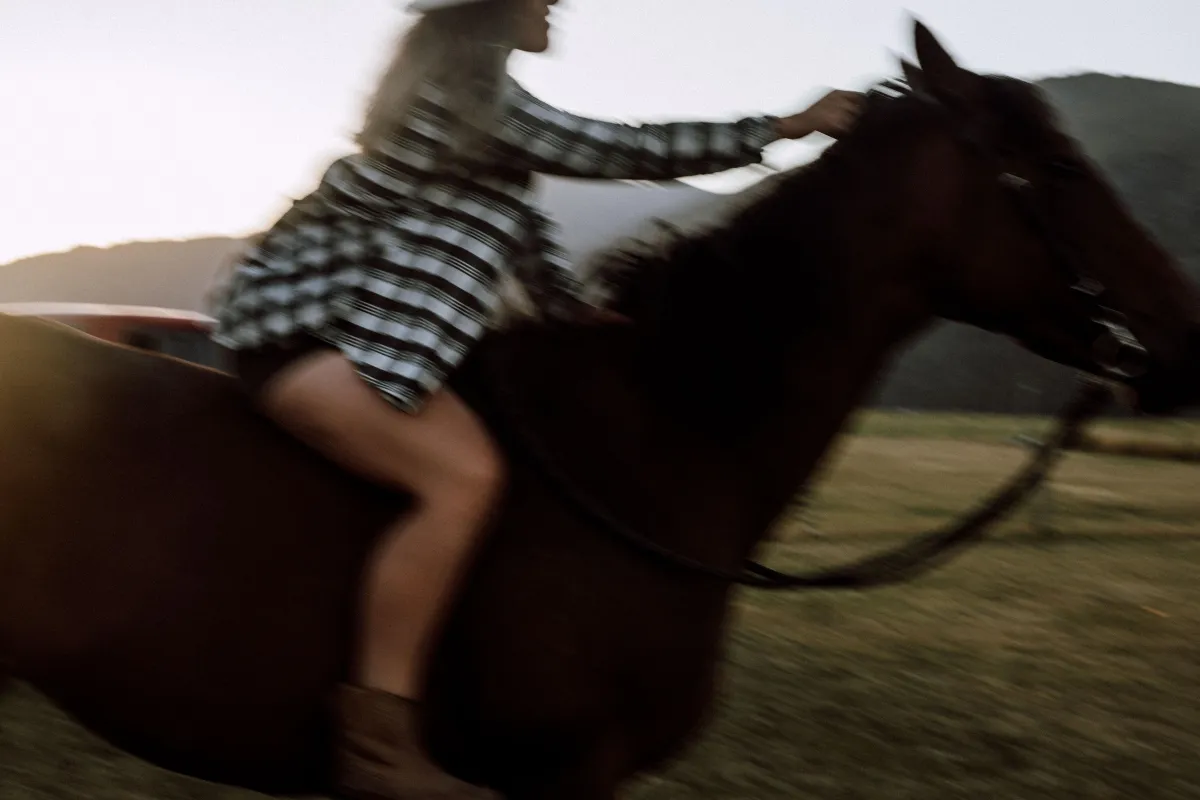
For years, I've been teaching women how tone and body language change the way people treat you. I've done this in person, on the farm, in my Southern Girl Finishing School workshops. And the subject that teaches it best isn't me. It's my 700kg horse, Faith.
Here's the drill. I take the girls through it one at a time. Each of them leads Faith towards them, walking backwards, and they need to get her to stop at a respected distance away. To make that happen, they have to use a strong voice and strong body language. That's it. That's the whole tool.
If they look at the ground, shrink themselves, mumble, or aren't clear with their language, Faith just keeps coming into their space. She doesn't do it to be difficult. She does it because they haven't given her a reason to stop. But the second one of them gets clear, assertive, and matches her body language to her words, Faith stops in her tracks. Every time. And I watch it click on their faces, that moment they realise it actually worked, that their voice alone made a 700kg animal stop.
People aren't that different from Faith. They read your certainty before they read your words. And most of us have never been taught how to hold a boundary the way I hold that line with a horse.
Step One: Notice how much you explain yourself
Start paying attention to how you say no. Not the big no's, the small ones. "I can't make it Saturday, because my sister's coming down and we haven't seen her in ages and I promised the kids we'd go to the farmers market and honestly I'm just so tired." That's not a no. That's an essay defending a no you're allowed to give for free. Notice how often you do this. You'll be shocked.
Step Two: Learn what your body is saying before you open your mouth
Faith doesn't listen to the words. She reads posture, energy, whether the girl leading her actually means it. People do the same thing, even if they'd never admit it. If you're shrinking your shoulders, avoiding eye contact, or laughing nervously while you decline something, the other person clocks that before they clock your actual sentence. Your no needs to match your body, or it won't land as a no at all.
Step Three: Practice saying the word without cushioning it
Just the word. Not "no, sorry, but." Not "I don't think I really can, maybe." Just no. It'll feel uncomfortable the first few times. Good. That discomfort is the muscle building.
Step Four: Watch what happens when you don't hold the line
Next time you cave, actually notice it. Notice the moment your voice went soft, or you added three extra sentences trying to make everyone feel okay about it. That's the exact moment Faith would've kept walking into your space. Someone always will, if you let them.
Step Five: Practice on low stakes first
Don't start with your mother-in-law or your boss. Start with the barista who asks if you want to round up your total. Start with the friend who wants to reschedule for the third time. Build the rep count somewhere it doesn't cost you much, so it's there when it actually matters.
Step Six: Expect to be tested
Faith doesn't stop the first time I get it slightly right. She tests it. She'll drift forward again just to check if I really mean it this time. People do exactly the same thing. The first no rarely fully lands. Expect a second attempt, a guilt trip, a "come on, just this once." That's not proof you were wrong to say no. That's just the test.
Step Seven: Hold it when it gets uncomfortable
This is the one that actually separates the women who change this pattern from the ones who read this blog, nod, and go straight back to writing essays. The discomfort in the pause after you say no, and don't fill it, is the whole point. Sit in it. Let it be awkward. It gets easier every single time you don't cave.
Here's what actually happens when you don't hold the line. You train the people around you to keep pushing, because it's worked before. Every over-explained no, every guilt-softened decline, every "I'm so sorry, I just, ugh, okay maybe I can" teaches the people in your life that your boundary is negotiable if they just wait you out or ask twice. It's not their fault. You taught them that. The good news is you can teach them something different, starting today.
The Long Game
This isn't about becoming blunt or cold or difficult to deal with. Faith and I still have a great relationship. I still love that horse. Holding a boundary well doesn't damage a relationship, it actually makes people trust you more, because they know where they stand with you. The women who can say no cleanly are usually the ones who show up the most generously when they say yes, because their yes actually means something.
You don't need the essay. You never did. You just need the strong voice and the body language to match it, and the willingness to sit in the uncomfortable silence after.
If hard conversations and honest boundaries are the thing you keep avoiding, that's exactly what we work through inside Hard Conversations. Real tools, no fluff, built for real life. Only $9.99